
Jakob Frank · 19 September 2026
Secondary Sleep Initiatives Complement National Plans to Reduce Standardized Testing Burdens
Secondary schools across multiple regions have introduced sleep-focused programs that align with government efforts to ease the load of standardized assessments. Data from education ministries shows that prolonged testing schedules often disrupt adolescent sleep patterns, with average nightly rest falling below recommended levels during exam periods. Researchers at institutions tracking youth health note connections between high-stakes testing calendars and elevated reports of fatigue among students aged 13 to 18.
National strategies in several countries now incorporate sleep modules into existing wellness curricula, aiming to offset the physiological effects of reduced testing frequency. These modules cover topics such as consistent bedtimes, screen curfews, and recognition of sleep debt accumulated during revision cycles. Evidence from longitudinal studies indicates that students exposed to such content maintain steadier sleep durations even when assessments remain part of the academic calendar.
Alignment Between Sleep Programs and Testing Reforms
Policy documents released by education authorities outline how sleep initiatives serve as parallel supports to testing reductions. In practice, schools that decreased the number of mandatory standardized exams by 20 percent over three years paired those changes with mandatory sleep hygiene sessions held twice per term. Observers tracking implementation report that attendance in these sessions correlates with improved punctuality and fewer mid-morning attention lapses documented by classroom teachers.
One program launched in 2024 combined lighter testing windows with parent information evenings focused on household routines that protect sleep. Figures from participating districts reveal a measurable drop in chronic sleep restriction complaints logged through school counseling services. The approach relies on coordination between health agencies and education departments rather than isolated interventions.
Implementation Patterns Observed in 2025 and 2026
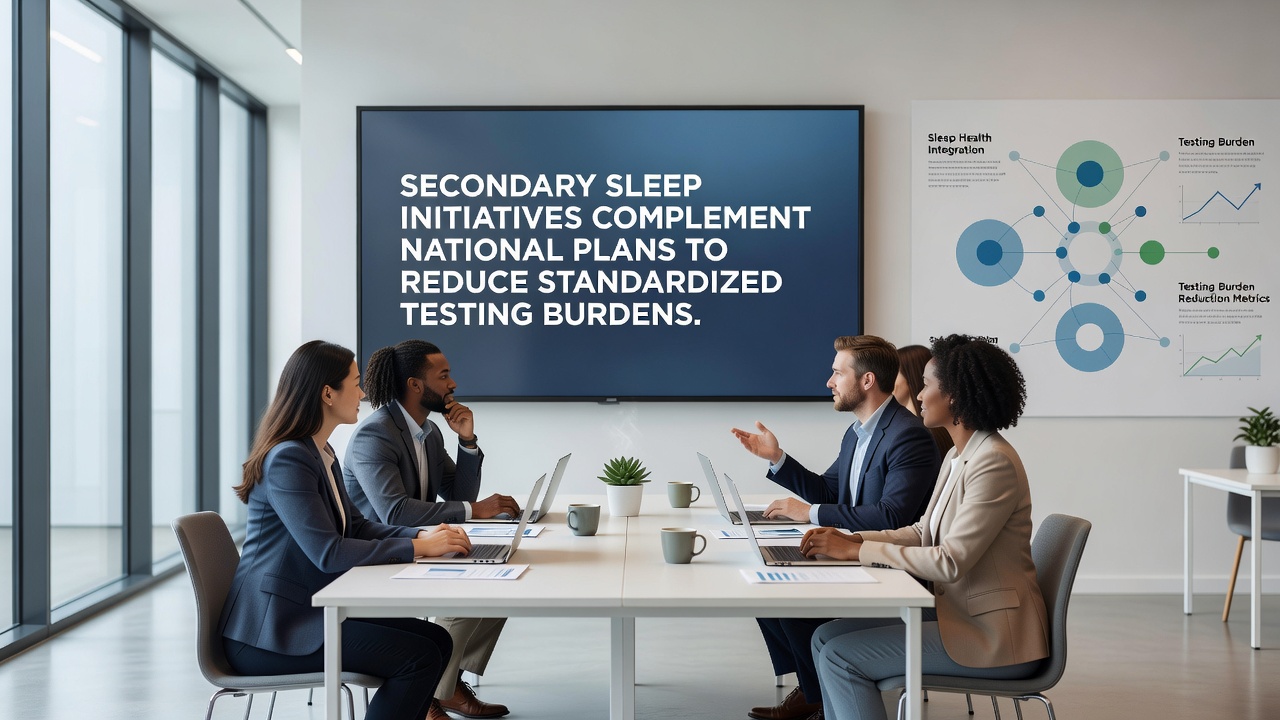
Rollouts scheduled for September 2026 will expand similar frameworks to additional districts, integrating sleep tracking tools into student well-being dashboards already used for academic progress monitoring. These tools aggregate anonymized data on self-reported rest hours alongside assessment schedules, allowing administrators to identify periods when testing clusters most threaten recovery time. Pilot versions of the dashboards demonstrated that visual feedback prompted schedule adjustments at the school level without requiring central mandates.
Training for teachers emphasizes recognition of sleep-related performance dips rather than direct diagnosis. Sessions delivered through regional professional development networks cover evidence-based strategies such as delayed start times on assessment days and brief movement breaks that mitigate accumulated fatigue. Data collected from early adopters shows these adjustments require minimal timetable restructuring yet produce consistent gains in student-reported alertness.
Supporting Data from Health and Education Sources
According to reports compiled by the Centers for Disease Control and Prevention, adolescents facing dense testing periods average 6.5 hours of sleep on school nights, below the eight-to-ten-hour range associated with optimal cognitive function. Separate analyses from the Organisation for Economic Co-operation and Development link reduced examination frequency to modest improvements in self-reported well-being indicators across member countries. Schools layering sleep education onto these reforms record additional stabilization in daily attendance metrics.
Case examples from districts that introduced later start times alongside testing reductions illustrate the complementary effect. One jurisdiction documented a 12 percent decline in nurse visits for headache complaints during peak academic terms after both measures took effect. Another tracked improvements in standardized test completion rates, attributing part of the change to better baseline rest rather than changes in content difficulty.
Conclusion
Secondary sleep initiatives continue to operate alongside national testing reduction plans, forming coordinated responses to documented adolescent health patterns. September 2026 expansions will test the scalability of combined approaches across wider geographic areas, with ongoing data collection focused on attendance, attention metrics, and self-reported rest. The structure relies on existing school infrastructure and inter-agency coordination rather than new standalone systems.