Zara Lang · 5 September 2026
Curriculum Updates Integrate Coding and Game Mechanics into Primary Mathematics Programs
Education authorities across multiple regions have begun rolling out revised curricula that embed basic coding tasks alongside gamified elements in early mathematics lessons, with several programs scheduled for full implementation in September 2026. These changes aim to align foundational number concepts with introductory programming logic while using point systems, levels, and challenges to maintain student engagement during core arithmetic and geometry units.
Core Components of the Revised Frameworks
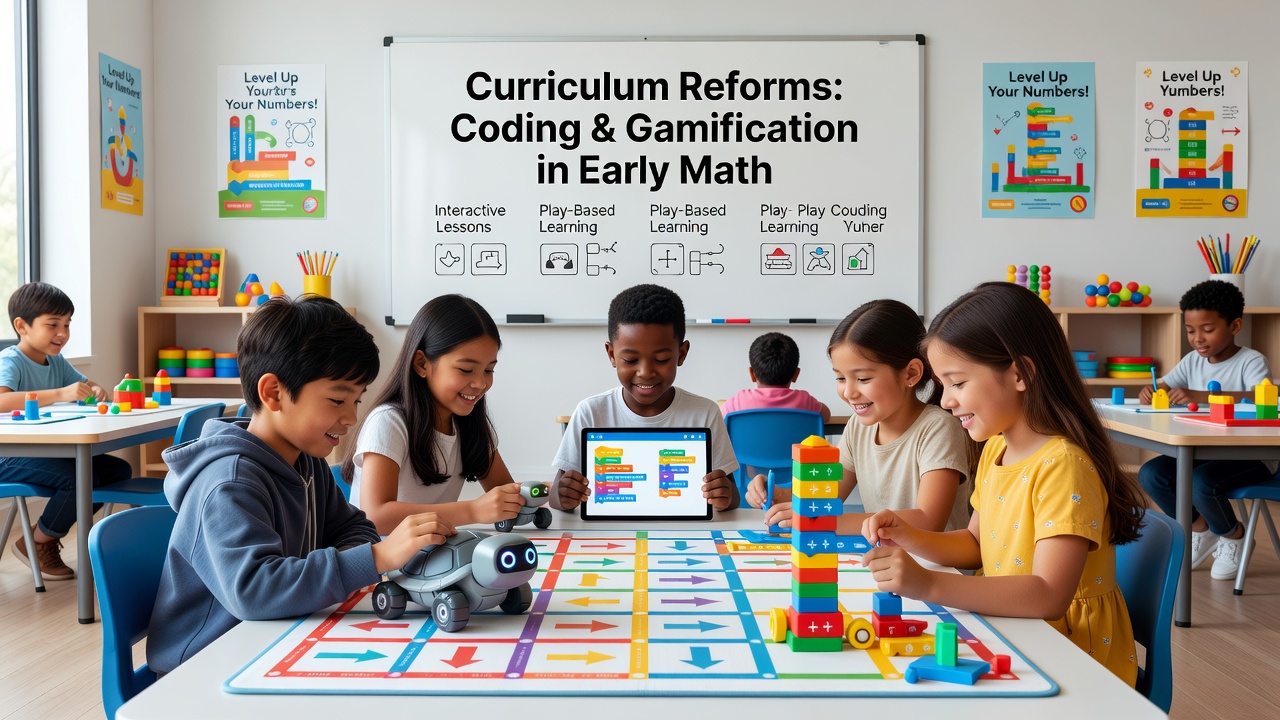
Updated guidelines from various ministries specify that children aged six to nine will encounter sequencing activities that mirror simple algorithms when learning addition and subtraction patterns, whereas spatial reasoning tasks incorporate block-based interfaces similar to those found in visual programming tools. Data from pilot programs in several European districts show that participating classes completed an average of twelve integrated modules per semester, covering topics from place value to introductory measurement through interactive scenarios where students earn badges for accurate problem solving.
Observers note that gamification appears in the form of progress trackers that unlock new virtual environments once students demonstrate mastery of specific skills, yet the underlying mathematical objectives remain unchanged from traditional standards. Researchers at institutions tracking these pilots report that such structures encourage repeated practice without altering assessment criteria, and figures reveal consistent participation rates above 85 percent in monitored classrooms.
Implementation Patterns Across Regions
Schools in Canada and Australia have adopted parallel approaches where teachers receive modular lesson packs that combine offline coding cards with digital game layers, allowing flexibility in low-connectivity settings. According to materials released by the Australian Curriculum, Assessment and Reporting Authority, these resources map directly onto existing numeracy outcomes, so educators do not need to sacrifice required content for the new elements. European Commission summaries of member-state trials indicate that teacher training programs lasting twenty hours prepared staff to facilitate both the coding sequences and the game mechanics without requiring specialized technical backgrounds.
One study revealed that classes using the combined approach completed fraction comparison tasks in fewer instructional hours than control groups while maintaining equivalent accuracy levels. Students progressed through levels by correctly ordering unit fractions on number lines, then applied the same sequencing logic in a simple drag-and-drop coding environment to automate those comparisons.
Supporting Evidence from Early Evaluations
Longitudinal tracking conducted by OECD analysts following similar digital integration efforts shows measurable gains in procedural fluency when students encounter mathematics through structured game loops, although researchers emphasize that results depend on consistent teacher support rather than the tools alone. In one documented case, a district in northern Europe observed that students who logged at least three gamified sessions weekly demonstrated stronger retention of multiplication facts after eight weeks compared with peers using standard worksheets.
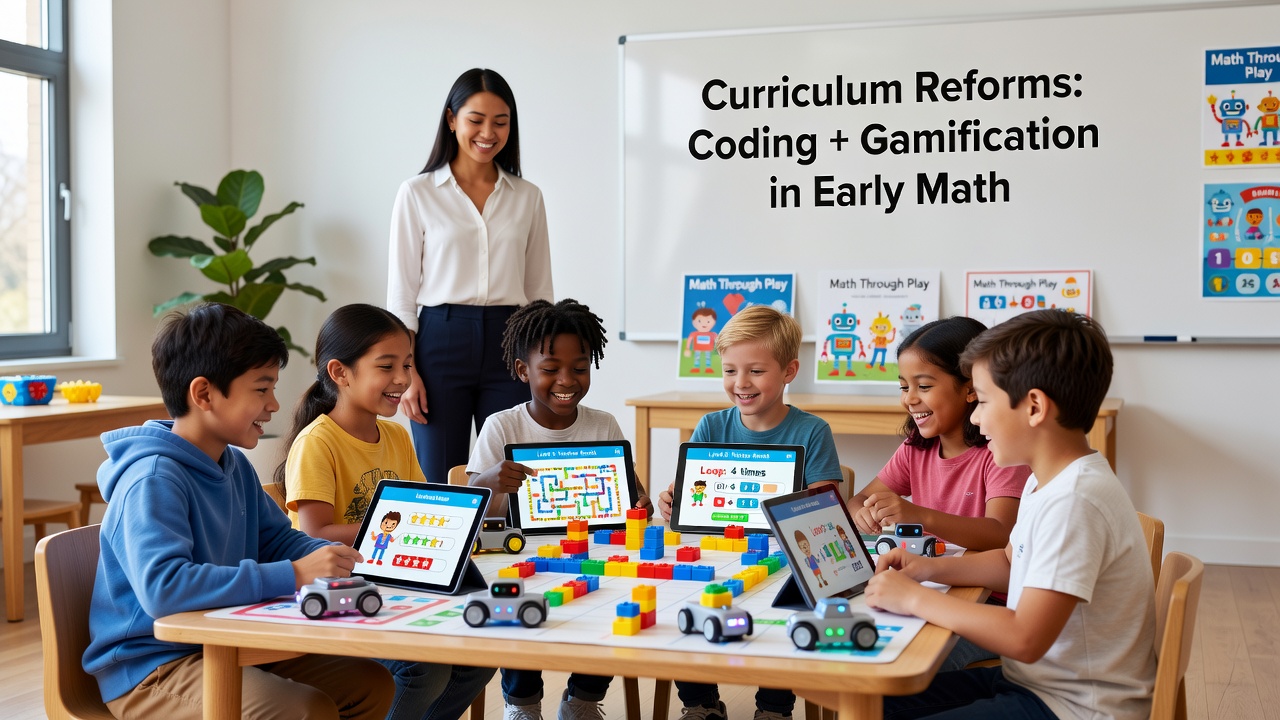
Additional reports from the U.S. Department of Education highlight that embedding computational thinking within mathematics does not require separate technology classes at the primary level, provided the coding activities stay tightly linked to number and geometry standards. Those evaluations stress the importance of aligning game rewards with accurate mathematical reasoning rather than speed alone, thereby preventing superficial engagement.
Teacher Preparation and Resource Allocation
Professional development modules rolled out ahead of the September 2026 deadlines focus on mapping game mechanics to specific learning progressions, such as connecting leveling systems to mastery of place-value concepts. Districts report allocating an average of four additional planning hours per teacher per month during the first year of rollout, with resource kits containing both printable coding mats and access codes for cloud-based game platforms.
Evidence suggests that schools pairing these kits with ongoing coaching visits sustain higher fidelity to the intended integration model. Participants in such support structures describe smoother transitions when introducing block-coding tasks that reinforce skip-counting sequences, for instance, or when using virtual reward systems to track progress through geometry transformations.
Conclusion
Curriculum reforms scheduled for wider adoption continue to link introductory coding practices with established gamification techniques inside early mathematics instruction, supported by training structures and evaluation data from multiple international sources. The September 2026 timelines provide a concrete benchmark against which participating systems will measure alignment between the new digital components and longstanding numeracy goals.