Willa Bauer · 3 October 2026
Connecting Early Math Engagement Tools to Teen Rest Programs Amid Shifting Assessment Structures
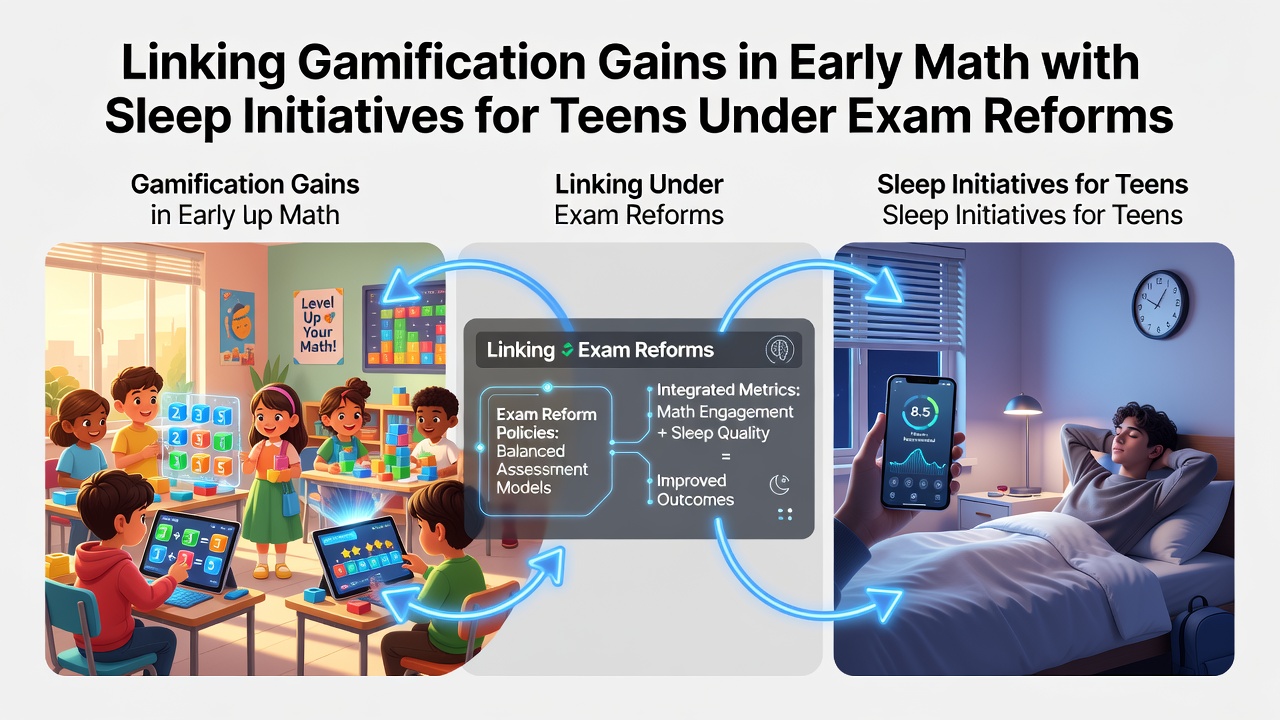
Education systems continue to explore connections between foundational skill development and later adolescent support mechanisms, particularly as assessment frameworks evolve in multiple regions. Gamification approaches in primary mathematics programs have shown measurable impacts on student participation rates, according to data from international monitoring bodies, while separate sleep-focused initiatives target older learners navigating changes in testing schedules. Observers note that early exposure to interactive learning formats may influence long-term study habits, which in turn intersect with rest quality during periods of academic pressure.
Foundations in Primary Mathematics Programs
Programs incorporating game elements into early math instruction report increased completion rates for core exercises, with figures from education ministries in Canada and Australia indicating gains of 15 to 20 percent in basic arithmetic proficiency over standard methods. These tools often use points, levels, and immediate feedback loops to maintain attention, allowing younger students to build fluency without traditional worksheet repetition. Researchers tracking cohorts over several years have documented how such engagement patterns carry forward, with participants showing steadier homework routines compared to control groups.
Implementation varies by district, yet common elements include adaptive algorithms that adjust difficulty based on real-time responses. Data compiled by the OECD education directorate highlights similar patterns across participating member countries, where early adoption correlates with reduced anxiety markers during subsequent grade transitions. This progression sets a baseline for how structured play might indirectly support later wellness strategies.
Adolescent Sleep Initiatives and Exam Period Adjustments
Teen-focused sleep protocols have expanded in several jurisdictions to address documented declines in nightly rest hours during high-stakes evaluation windows. Studies from the National Institutes of Health in the United States track average reductions of 45 to 60 minutes in sleep duration among secondary students in the weeks preceding major assessments. Pilot programs in parts of Europe and New Zealand introduce scheduled wind-down periods, blue-light restrictions, and school-start time modifications to counteract these trends.
These measures operate alongside broader exam reforms that redistribute testing loads across the academic year rather than concentrating them in single sessions. Figures released by the European Commission education unit show participating schools achieving modest improvements in self-reported sleep consistency when combined with awareness modules on circadian rhythms. The linkage emerges when early math gamification graduates demonstrate stronger self-regulation skills, enabling them to integrate rest guidelines more readily into daily schedules.
Observed Intersections Between the Two Areas
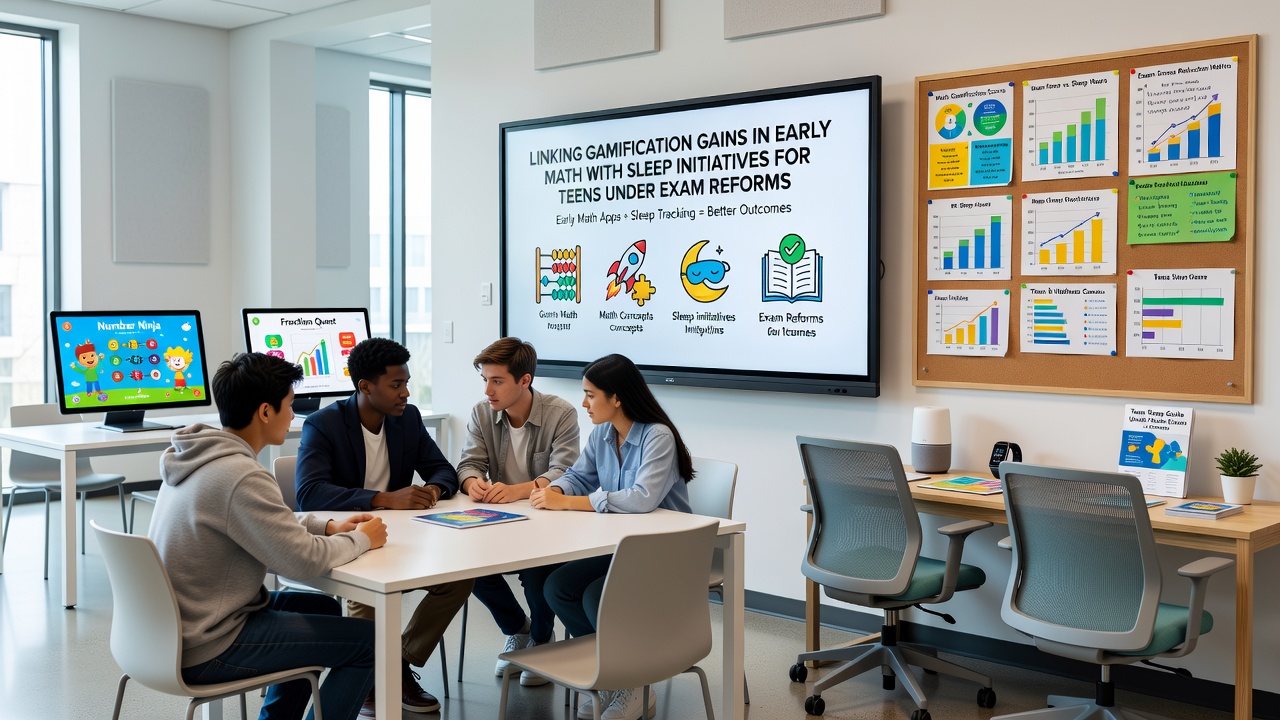
Longitudinal observations reveal that students who encountered gamified math environments in primary years often maintain higher task persistence into adolescence, which aligns with the behavioral components emphasized in sleep initiatives. A research paper from the University of Melbourne education faculty notes correlations between sustained early engagement and improved adherence to evening routines during reform periods that alter exam timing. Rather than direct causation, analysts describe overlapping skill sets around goal tracking and progress monitoring.
October 2026 marks the rollout of coordinated pilots in select districts where primary math gamification archives feed into secondary wellness dashboards, allowing educators to identify patterns in both academic metrics and rest logs. This integration draws on frameworks developed by regional health-education partnerships, emphasizing data continuity without increasing administrative burdens on staff.
Implementation Patterns Across Regions
Districts in Scandinavia have layered sleep modules onto existing digital learning platforms originally designed for mathematics reinforcement, creating unified interfaces that display both skill badges and rest reminders. Australian state education departments report similar crossovers, where gamification analytics inform personalized sleep coaching prompts delivered through school apps. These approaches rely on voluntary participation metrics rather than mandatory tracking, preserving student agency throughout the process.
Training for educators focuses on interpreting combined datasets, with sessions offered through professional networks that span multiple countries. Evidence from these efforts indicates that alignment between early skill-building tools and later support structures can reduce fragmentation in student support services, though outcomes depend on consistent funding and local adaptation.
Conclusion
Connections between gamification outcomes in early mathematics and sleep initiatives for teens continue to develop under evolving exam conditions, supported by aggregated data from international and national sources. Coordinated efforts scheduled around October 2026 provide further opportunities to examine these links through structured observation and shared reporting mechanisms. The emphasis remains on measurable indicators across age groups and geographic contexts.