Zara Lang · 17 October 2026
Bridging Digital Skills and Wellness Initiatives Through Educator Training Programs
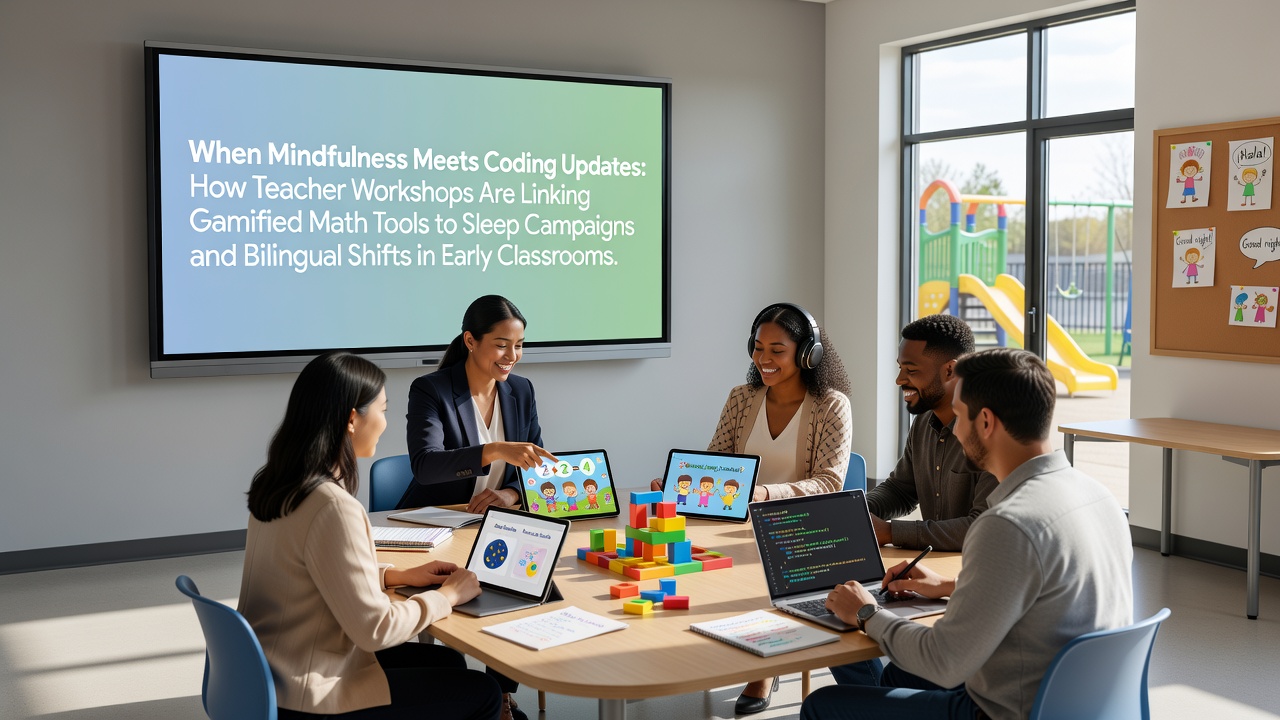
Teacher workshops scheduled across multiple regions in October 2026 bring together mindfulness practices and updates in coding instruction while connecting these elements to gamified mathematics resources, sleep awareness campaigns, and transitions toward bilingual instruction in primary settings, and data from education ministries in Canada along with reports from the European Commission highlight how such programs coordinate these components for younger learners.
Participants in these sessions examine how coding modules can incorporate breathing exercises and focused attention techniques before students engage with interactive math platforms, and this approach draws from research indicating that brief mindfulness segments before digital activities support sustained attention during problem-solving tasks.
Workshop Structures and Content Delivery
Organizers design sessions around sequential modules where instructors first review coding fundamentals updated for primary-level tools, then demonstrate ways to embed gamified elements such as point systems and level progression into arithmetic exercises, while trainers introduce mindfulness prompts that students can use during transitions between activities, and separate segments address sleep education by outlining how consistent rest schedules align with daily learning patterns.
Case examples presented during the workshops show classrooms where teachers combine these elements by starting math periods with short guided reflections followed by game-based challenges, and records from participating schools note that students maintain engagement across longer sessions when these steps occur in sequence.
Connections to Sleep Awareness and Bilingual Adjustments
Sleep campaigns integrated into the training materials reference guidelines from health authorities in Australia that link regular sleep durations with improved cognitive performance, and workshop leaders explain methods for sharing these guidelines with families through simple classroom communications that avoid adding to existing homework loads.
Bilingual shifts receive attention through discussions of how early exposure to second-language vocabulary can pair with math games that present terms in both primary and additional languages, and evidence collected by researchers at the University of Toronto indicates measurable gains in language retention when such pairings occur consistently during the early grades.

Implementation Patterns Across Regions
Schools adopting these combined approaches report using existing digital platforms that already contain gamified math components, and updates to coding elements allow teachers to customize prompts so that mindfulness cues appear at set intervals during gameplay, whereas bilingual vocabulary lists integrate directly into the same interfaces without requiring separate applications.
Training materials distributed at the workshops include templates for lesson sequences that alternate between focused math challenges, brief rest reminders, and language reinforcement exercises, and administrators note that these templates fit within standard timetable structures rather than extending school hours.
Observed Outcomes and Data Trends
Initial figures released by participating districts show increases in student participation rates during mathematics periods when the combined elements appear together, and follow-up assessments track whether sleep habit discussions lead to measurable changes in reported rest times among families, while bilingual vocabulary retention receives separate monitoring through periodic checks.
One documented example involves a network of schools that introduced the workshop-derived sequences in the fall term of 2026 and recorded attendance consistency alongside modest improvements in standardized math subtest scores, though analysts caution that multiple variables influence such results over short periods.
Future Coordination Efforts
Education planners continue to refine how teacher preparation programs maintain alignment among mindfulness components, coding revisions, gamified tools, sleep messaging, and bilingual adaptations, and ongoing data collection from various regions supports adjustments to workshop formats based on classroom feedback rather than top-down directives.
Conclusion
These interconnected workshop initiatives demonstrate how separate education priorities can receive coordinated treatment within existing training frameworks, adn records from October 2026 events provide concrete examples of the methods used to present these topics to instructors working with early-grade students.